



Building a successful sales prospecting strategy for manufacturing is like constructing a precision-engineered machine. Each component must work in perfect harmony to achieve optimal performance. The quality of your research, the timing of your outreach, and the precision of your messaging all determine whether your prospecting efforts will run smoothly or grind to a halt.
Manufacturing companies operate differently than other industries—they value efficiency, precision, and measurable results above all else. Generic prospecting approaches simply don’t cut it in this environment where decisions involve multiple stakeholders, complex technical requirements, and substantial capital investments.
The manufacturing sector presents unique challenges that demand specialized strategies. From navigating intricate supply chains to understanding regulatory compliance requirements, successful prospecting requires a deep appreciation for how these companies truly operate. When you master these nuances, however, the rewards are not just substantial—they’re scalable, predictable, and long-term
Below, we’ve engineered seven proven strategies specifically designed for manufacturing prospecting success. Your task is to calibrate these components to your specific market, fine-tuning each element until you’ve created a prospecting machine that consistently delivers qualified leads and converts them into lasting partnerships.
The result? A truly satisfying pipeline of high-value manufacturing clients!
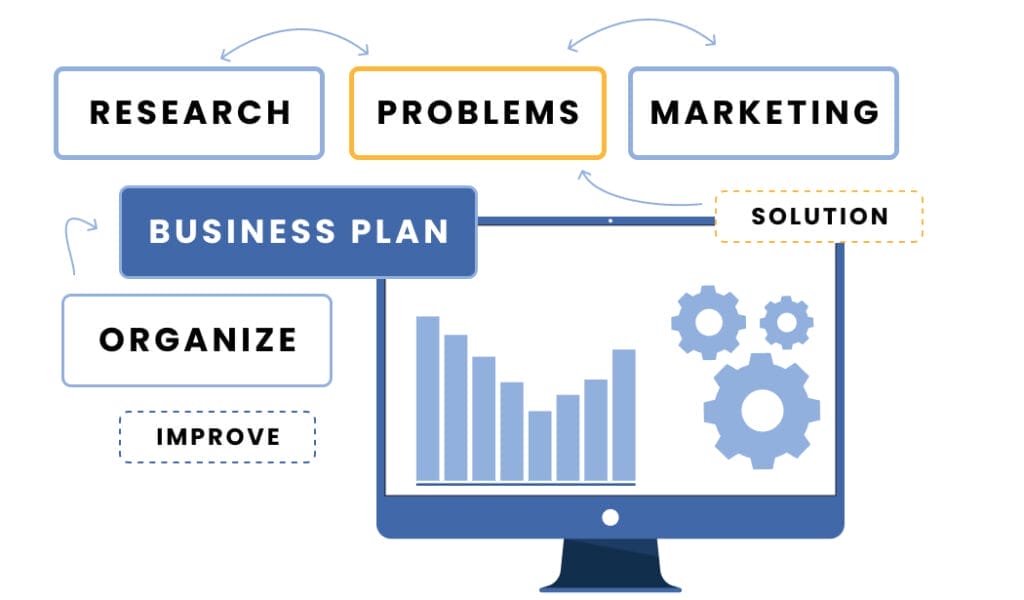
Understanding the Manufacturing Operational Framework
Before diving into specific tactics, it’s essential to understand what makes manufacturing companies tick. Unlike other industries, manufacturing operates within a complex operational framework involving plant managers, procurement specialists, engineers, quality control experts, and executive decision-makers. Each stakeholder has distinct priorities and evaluation criteria. This is especially true for franchise-based manufacturing organizations, such as FASTSIGNS, where prospecting efforts must align across corporate standards, local ownership, and operational teams.
Manufacturing companies also face unique pressures: supply chain volatility, increasing automation demands, stringent regulatory compliance, and the perpetual need to optimize efficiency while maintaining quality standards. These challenges create opportunities for solutions that can demonstrate clear, measurable value.
Related Article: Best Lead Prospecting Tools for 2025
Tip 1: Engineer Your Research Strategy
Effective sales prospecting for manufacturing begins with precision research that goes far beyond surface-level company information. Think of research as your blueprint—without it, your entire prospecting structure lacks foundation.
Start by analyzing the company’s recent financial performance, expansion announcements, and capital investment patterns. Has the company recently acquired new facilities or upgraded equipment? These signals often indicate upcoming procurement opportunities that savvy prospectors can capitalize on.
Dive deep into industry trade publications and regulatory updates. Manufacturing companies must constantly adapt to changing compliance requirements, safety standards, and environmental regulations. Understanding these pressures allows you to position your solution as a strategic necessity rather than a nice-to-have option.
LinkedIn becomes your intelligence-gathering hub. Monitor company pages for announcements about new hires, promotions, and strategic initiatives. Employee posts often reveal valuable insights about current challenges, upcoming projects, or recent successes that you can reference in your outreach, making your approach immediately relevant and timely.
Tip 2: Master the Manufacturing Timeline
Unlike other industries, manufacturing operates on predictable cycles that smart prospectors can leverage for maximum impact. Timing isn’t just important—it’s everything.
Most manufacturing companies follow annual budget cycles, typically planning major purchases during Q4 for implementation the following year. However, maintenance windows and production schedules create additional timing opportunities throughout the year that many prospectors overlook.
Research your prospect’s production schedule to identify slower periods when decision-makers have bandwidth for meaningful conversations. Many manufacturers schedule major maintenance during traditional vacation periods (e.g. late December or mid-summer) or between seasonal production runs. These windows often coincide with equipment evaluation and upgrade decisions.
Consider seasonal fluctuations specific to their industry segment. Agricultural equipment manufacturers may be most receptive during off-seasons, while companies serving retail markets might be busiest during pre-holiday production ramps. Understanding these patterns allows you to optimize your outreach timing for maximum receptivity.
Tip 3: Calibrate Your Technical Communication
Manufacturing professionals appreciate precision, accuracy, and technical competence above all else. Generic sales pitches fall flat with engineers and plant managers who deal with complex specifications daily. Your communication must be calibrated to their technical wavelength.
Invest time in understanding the specific terminology, processes, and pain points relevant to their industry segment. When discussing ROI, focus on metrics that actually matter to manufacturers: Overall Equipment Effectiveness (OEE), mean time between failures (MTBF), production throughput, waste reduction, and energy efficiency.
Safety and compliance considerations are paramount in manufacturing environments. Understand relevant regulations like OSHA standards, EPA requirements, or industry-specific certifications. Demonstrating awareness of these critical factors immediately establishes credibility and shows you understand their operational realities… not just their business card titles.
Tip 4: Build a Multi-Layered Network
Manufacturing decisions rarely involve a single person—they’re collaborative processes involving multiple departments and hierarchy levels. Success requires building relationships across this complex network, creating multiple pathways to decision-makers.
Map out the decision-making process early, identifying key stakeholders including end-users, technical evaluators, budget holders, and final decision-makers. Each requires a different approach and value proposition tailored to their specific concerns and priorities.
Start by connecting with technical personnel who understand the day-to-day challenges your solution addresses. These individuals often become internal champions who can navigate organizational politics and advocate for your solution during internal discussions when you’re not in the room.
Don’t neglect support functions like maintenance, quality control, and safety teams. These departments often wield significant influence on purchasing decisions, especially for solutions that impact their daily operations. Building relationships across the organization creates redundancy, ensuring your opportunity doesn’t disappear if your primary contact leaves.
Tip 5: Harness Industry Event Momentum
Manufacturing professionals heavily rely on industry events for discovering new solutions and staying current with technological advances. Trade shows like IMTS, Pack Expo, or industry-specific events provide unparalleled access to decision-makers who are actively seeking solutions.
Develop a systematic pre-event prospecting strategy by researching attendee lists and scheduling meetings in advance. Use social media to announce your presence and invite prospects to visit your booth. This proactive approach ensures you’re meeting with qualified prospects rather than hoping for random foot traffic.
The real magic happens in post-event follow-up, which is often neglected by amateur prospectors. Within 48 hours, send personalized messages referencing specific conversations and concrete next steps. The window of opportunity closes quickly after events. Prompt, relevant follow-up separates professional prospectors from the competition.
Tip 6: Quantify Your Value Proposition
Manufacturing companies live and breathe efficiency metrics—every purchase decision ultimately comes down to quantifiable returns on investment. Vague promises of “improved performance” simply don’t resonate with data-driven decision-makers.
Develop compelling case studies that showcase specific, measurable results: “Reduced production downtime by 15%,” “Improved yield rates by 8%,” or “Decreased energy consumption by 12%.” The more specific and quantifiable your value proposition, the stronger your position during procurement discussions.
Create ROI calculators specific to manufacturing scenarios. Help prospects visualize the financial impact of your solution on their operations, including factors like labor savings, reduced waste, improved quality, and decreased maintenance costs. This tangible approach transforms abstract benefits into concrete business justification.
Social proof carries significant weight in manufacturing circles. Testimonials from similar companies, industry awards, and third-party validations help overcome skepticism and build confidence in your solution’s effectiveness… particularly important in an industry where operational failures can have serious consequences.
Tip 7: Execute Strategic Persistence
Manufacturing sales cycles can extend 6-18 months, requiring sustained, purposeful persistence. However, persistence without value quickly becomes counterproductive. Every interaction should provide something useful: industry insights, relevant case studies, or solutions to specific challenges mentioned in previous conversations.
Develop a systematic follow-up cadence that maintains visibility without overwhelming prospects. Mix communication channels—emails, phone calls, LinkedIn messages, and occasional handwritten notes—to stay top-of-mind while respecting their preferences and communication styles.
Focus on relationship building rather than transaction pushing. Manufacturing professionals value long-term partnerships with vendors who understand their business and provide ongoing support. This relationship-first approach often leads to larger deals and recurring business opportunities—the kind that transform individual sales into strategic partnerships.

Streamlining Your Manufacturing Prospecting with Retreva
While implementing these seven components manually can yield excellent results, today’s competitive manufacturing landscape demands efficiency at every level, including your prospecting process. Just as manufacturers embrace automation to optimize production, smart sales teams are leveraging digital automation to scale their prospecting efforts without sacrificing quality or personalization.
Retreva’s automated sales prospecting platform transforms the traditional prospecting workflow into a precision-engineered system designed specifically for B2B manufacturing environments. Rather than spending countless hours on manual research and outreach, your team can focus on what they do best: building relationships and closing deals.
Here’s how Retreva’s streamlined process works:
- Sign up and get started – Quick onboarding gets you operational and leading the pack in no time.
- Add your contacts to the dashboard – Upload existing prospects and dormant leads that may be ready for re-engagement.
- Retreva takes it from here – Our system gathers company intelligence, crafts personalized manufacturing-focused content, and launches automated outreach sequences.
- Meet and close to win the sale – Receive notifications when prospects are ready for direct conversations and focus on closing deals.
The result? Manufacturing sales teams using Retreva typically see more qualified conversations with less manual effort, enabling them to focus on high-value activities that drive revenue growth.
For manufacturing companies where precision, efficiency, and measurable results matter most, Retreva provides the automated prospecting infrastructure that scales with your growth ambitions while maintaining the personalized approach that manufacturing professionals expect.
Fine-Tuning Your Manufacturing Prospecting Machine
Sales prospecting for manufacturing requires a specialized approach that respects the industry’s unique operational framework and decision-making processes. By implementing these seven strategic components—engineering thorough research, mastering industry timing, calibrating technical communication, building multi-layered networks, harnessing event momentum, quantifying value propositions, and executing strategic persistence—you’ll dramatically improve your success rate and build lasting relationships with manufacturing prospects.
The manufacturing sector represents enormous opportunities for companies that understand how to navigate its complexities. With the right prospecting approach, you can transform challenging manufacturing prospects into loyal, high-value customers who appreciate your industry expertise and professional approach.