



Starting your own business is one of the most exciting yet nerve-wracking decisions you’ll ever make. But here’s the thing—before you even think about signing leases or ordering business cards, you need to answer one fundamental question: should you buy a franchise or start an independent business from scratch?
The franchise vs independent business debate isn’t just theoretical—it’s the foundation of your entire entrepreneurial path. This choice will shape everything about your entrepreneurial journey. It’s not just about the money you’ll invest upfront, though that’s certainly important. It’s about what kind of business owner you want to be, how much risk you’re comfortable with, and whether you thrive on structure or crave complete creative freedom.

Understanding the Core Difference
When you strip away all the complexity, the main difference between these two paths comes down to this: with a franchise, you’re buying a proven business model that someone else has already perfected, while with an independent business, you’re creating something entirely new from the ground up.
Think of it like cooking. Buying a franchise is like following a master chef’s recipe—you know the ingredients work together, you understand the process, and you’re likely to get consistent, delicious results. Starting an independent business is like experimenting in your own kitchen, creating your own recipes. You might discover something amazing, but you also might burn a few dishes along the way.
Both approaches can lead to incredible success, but they require different mindsets, different resources, and different levels of risk tolerance.

Security Meets Opportunity in Franchises
When you become a franchise owner, you’re essentially joining a business network that’s already figured out what works. The franchisor has spent years, sometimes decades, refining their business concept, working through challenges, and building brand recognition that you can leverage from day one.
This established brand comes with tremendous advantages. Customers already know and trust the name, which means you’re not starting from zero when it comes to attracting your first clients. The franchisor’s success becomes your foundation, giving you access to proven marketing strategies, established systems, and a customer base that’s already familiar with what you’re offering.
The ongoing support you receive as a franchisee is often invaluable, especially if you’re new to business ownership. Most franchisors provide comprehensive training that covers everything from daily operations to financial management. They’ll help with site selection, guide you through the setup process, and continue supporting you long after you’ve opened your doors. This means you’re never truly figuring things out on your own—you have a whole team and franchise network backing you up.
Franchises also tend to have a stronger edge in long-term survival rates compared to independent businesses. According to a study by FranNet, 85% of franchise businesses remained operational after five years, a stark contrast to the approximately 50% survival rate of small businesses overall, based on data from the U.S. Small Business Administration.
This higher success rate is not accidental. Franchises provide entrepreneurs with a turnkey system that includes comprehensive training, marketing support, and an established brand reputation—critical advantages that help new owners navigate the early, most vulnerable years of business ownership.
For first-time entrepreneurs, this support network can significantly reduce the trial-and-error phase that independent business owners often endure. Instead of building operational processes from scratch, franchisees benefit from a tested blueprint for success, increasing their odds of achieving stability and growth.
Another considerable advantage is the purchasing power that comes with being part of a larger franchise system. When hundreds or thousands of franchisees are buying the same supplies, equipment, and inventory, the collective demand drives costs down. These bulk-purchasing benefits are often unattainable for standalone businesses and can lead to considerable long-term savings, boosting profitability right from the start.
However, this security and support come with trade-offs. Franchise owners must pay ongoing royalties to the franchisor, typically a percentage of gross sales that continues for the life of the agreement. While you own your business, you’re also bound by the franchisor’s rules and established procedures. This means less flexibility in how you operate, what you offer, and how you market to customers in your local area.
Your territory is also typically limited by your franchise agreement. While you might have exclusive rights to serve customers in your designated area, you can’t expand beyond those boundaries without purchasing additional franchise rights. Your success remains tied to the franchisor’s overall performance and reputation, which means their decisions can impact your business even when you’re doing everything right.
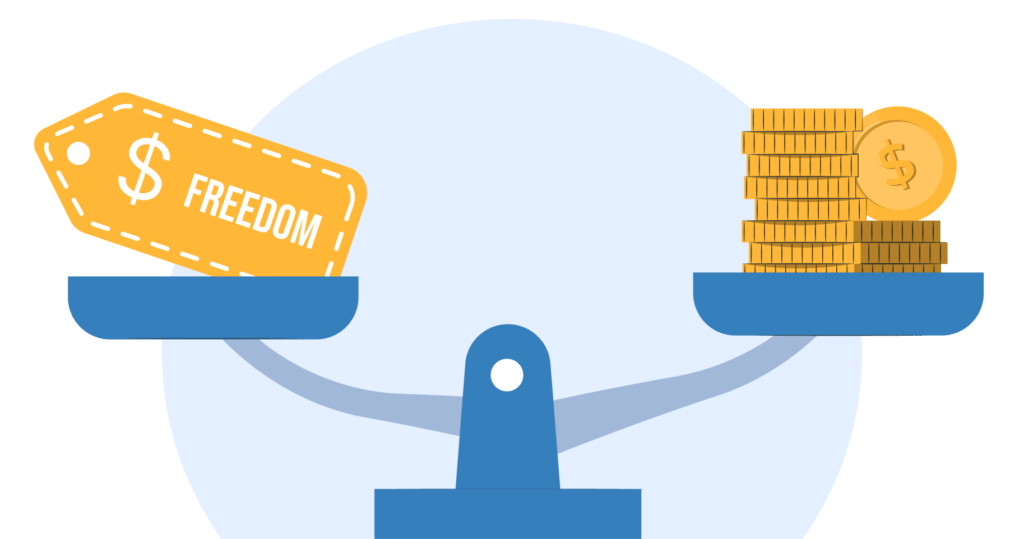
Freedom with Full Responsibility in an Independent Startup
Starting an independent business is like being handed a blank canvas and all the paints you could ever want. You have complete control over every brushstroke, every color choice, and every creative decision. The final masterpiece will be entirely yours, reflecting your vision, values, and unique approach to serving customers.
As an independent business owner, you make all the decisions about your business model, pricing strategies, marketing approaches, and company culture. This flexibility allows you to respond quickly to market conditions, pivot when opportunities arise, and adapt your offerings based on what you learn about your customers’ needs.
For those planning to start a business with $50K, an independent model offers the freedom to allocate funds where they matter most—from branding and product development to targeted marketing and operational essentials. The financial rewards can also be substantial. Without franchise fees and ongoing royalties eating into your profits, you keep everything you earn after covering your operating expenses. While the initial investment might be comparable to buying a franchise, the long-term financial benefits can be significantly higher if your business succeeds.
Typical franchise startup costs can vary widely depending on the industry and brand. For instance, the initial investment for a Budget Blinds franchise ranges from approximately $110,140 to $234,970. On the lower end, some franchises like Cruise Planners require entry points as low as $2,295, while high-end franchises such as Wyndham Hotels can require investments from $51.7 million to $94.2 million. Independent businesses, by contrast, offer more flexibility in startup costs but come with the added uncertainty of needing to establish brand recognition and operational processes from scratch.
There’s also something deeply satisfying about building a successful business from the ground up. You’re creating your own legacy, something that reflects your personal vision and expertise. When customers choose your business, they’re choosing you specifically, not just a recognized brand name.
But this freedom comes with significant challenges. Without a proven business model to follow, you’re essentially conducting market research and business development with your own money at stake. The learning curve is steeper, and the risk of making costly mistakes is higher. You’ll need to figure out everything from effective marketing strategies to efficient operational procedures through trial and error.
Building brand recognition takes time, patience, and consistent investment. While franchise owners benefit from established brand awareness, independent business owners must work harder and longer to earn customer trust and loyalty. This often means a longer path to profitability and sustainable growth.
You also won’t have access to the training, resources, and ongoing support that franchisees benefit from. Every challenge becomes your responsibility to solve, from selecting the right location to developing effective marketing campaigns. This can be overwhelming, especially for first-time business owners who are still learning the fundamentals of running a company.
Key Factors to Consider When Making Your Decision
Choosing between franchise and independent business ownership isn’t a decision you should make lightly. Here are the crucial factors you need to evaluate:
- Your risk tolerance and financial situation: Franchises typically offer more predictable outcomes but require ongoing royalty payments, while independent businesses have higher potential rewards but also higher risk of failure
- Your personality and work style: Do you thrive with structure and proven systems, or do you prefer forging your own path and making independent decisions about every aspect of your business?
- Your industry experience and expertise: If you’re entering a field where you have limited knowledge, the training and support from franchisors can be invaluable, but if you’re already an expert, you might prefer implementing your own ideas.
- Your long-term goals: Consider whether you want to build something you can eventually sell, expand into multiple locations, or create a legacy business you can pass down to family members.
- Your local market conditions: Some areas might be oversaturated with certain franchise concepts, while others might be hungry for innovative independent businesses that serve unmet needs.
- Your available time and resources: Independent businesses often require more hands-on involvement and problem-solving, while franchises provide more structured operational frameworks.
The reality is that successful business ownership is possible with either model. What matters most is choosing the approach that aligns with your strengths, goals, and circumstances.
Making the Right Choice for Your Future
Both franchise and independent business ownership can lead to incredible success stories. The key is being honest about what you want from your entrepreneurial journey and what you’re prepared to handle.
If you value security, proven systems, and ongoing support, and you’re comfortable with the trade-offs that come with following someone else’s business model, franchising might be your ideal path. The established brand recognition, proven track record, and comprehensive training can provide the foundation you need to build a thriving business.
On the other hand, if you’re excited by the prospect of complete creative control, you’re comfortable with higher risk in exchange for potentially higher rewards, and you have the expertise and resources to build something from scratch, independent business ownership might be calling your name.
Remember that there’s no universally “right” choice—only the choice that’s right for you. Take time to thoroughly research your options, talk to current business owners in both models, and honestly assess your own strengths, weaknesses, and goals. The decision you make today will shape your entrepreneurial journey for years to come, so make sure it’s one that sets you up for both financial success and personal fulfillment.
Whatever path you choose, you’re embarking on an exciting adventure that has the potential to transform not just your income but your entire life. The key is choosing the route that gives you the best chance of reaching your destination successfully.